
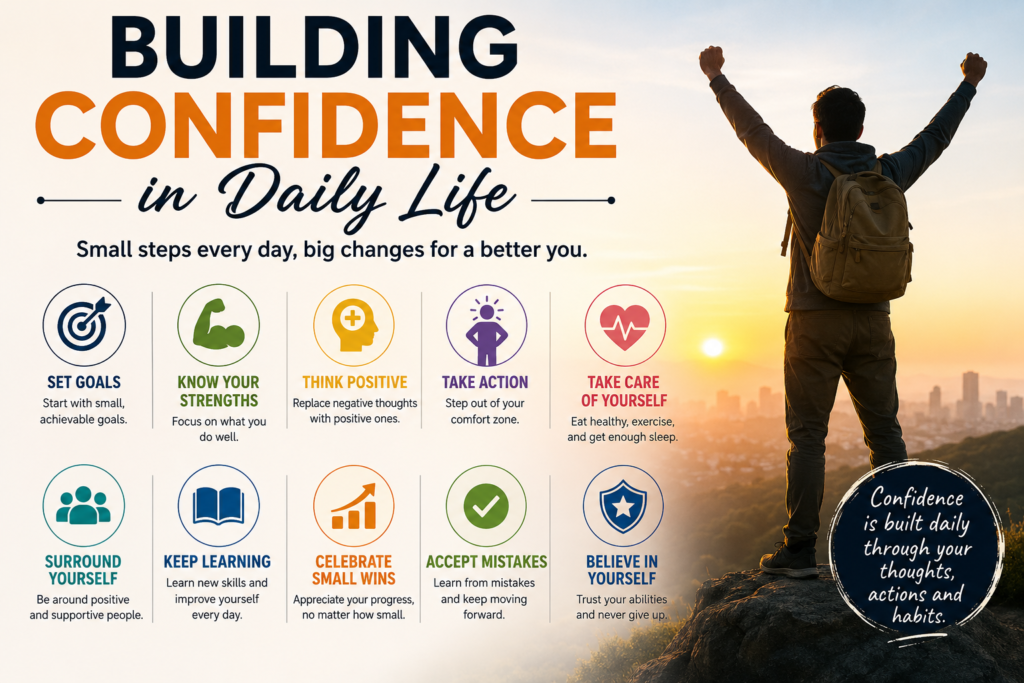
Building Confidence in Daily Life: A Practical Guide to Becoming Your Best Self
Confidence is one of the most important qualities a person can develop. It influences how we communicate, make decisions, face challenges, and pursue our goals. People who are confident often appear more successful because they believe in their abilities and are willing to take action. However, confidence is not something that people are simply born with—it is a skill that can be developed and strengthened over time. In today’s fast-paced world, many people struggle with self-doubt, fear of failure, and comparison with others. Social media, academic pressure, career expectations, and personal challenges can make it difficult to feel confident. The good news is that confidence can be built through small, consistent actions in daily life. This blog explores practical ways to develop confidence and create a positive mindset that helps you succeed. What Is Confidence? Confidence is the belief in your ability to handle situations, solve problems, and achieve your goals. It does not mean thinking that you are perfect or better than others. Instead, confidence means trusting yourself, recognizing your strengths, and accepting your weaknesses while continuing to improve. A confident person is not afraid to make mistakes because they understand that mistakes are a natural part of learning and growth. Confidence helps individuals face challenges with courage and resilience. Why Confidence Matters Confidence plays a major role in personal and professional success. It affects various aspects of life, including: Better Communication Confident people express their thoughts clearly and effectively. They are more comfortable speaking in public, participating in discussions, and sharing their ideas. Improved Decision-Making When you trust yourself, making decisions becomes easier. Confidence reduces hesitation and helps you take responsibility for your choices. Stronger Relationships Confidence allows you to build healthy relationships because you communicate honestly and respect yourself and others. Greater Success Whether in academics, sports, business, or career development, confidence encourages you to take opportunities and work toward your goals. Better Mental Health People with healthy confidence are less likely to be overwhelmed by criticism or negative opinions. They focus on growth rather than perfection. Common Causes of Low Confidence Before building confidence, it is important to understand what may be affecting it. Fear of Failure Many people avoid challenges because they fear making mistakes. This fear can prevent personal growth and learning. Negative Self-Talk Constantly telling yourself that you are not good enough can damage self-esteem and confidence. Comparing Yourself to Others Social media often shows only the highlights of people’s lives. Comparing yourself to others can create unrealistic expectations and feelings of inadequacy. Past Experiences Failures, criticism, or negative experiences from the past can sometimes affect how you view yourself. Recognizing these factors is the first step toward overcoming them. Practical Ways to Build Confidence Daily 1. Set Small Achievable Goals Confidence grows when you accomplish tasks and see progress. Start with small goals that are realistic and achievable. For example: Complete a daily workout. Read a chapter of a book. Learn a new skill for 20 minutes each day. Each achievement strengthens your belief in your abilities. 2. Focus on Your Strengths Everyone has unique talents and abilities. Instead of concentrating on what you lack, identify your strengths and build upon them. Make a list of things you do well. These could include communication, creativity, problem-solving, sports, or helping others. Reminding yourself of your strengths can boost your confidence significantly. 3. Practice Positive Self-Talk The way you speak to yourself matters. Replace negative thoughts with encouraging ones. Instead of saying: “I can’t do this.” Try saying: “I may find this challenging, but I can learn and improve.” Positive self-talk helps create a healthier mindset and increases confidence over time. 4. Take Care of Your Appearance You do not need expensive clothes or luxury products to feel confident. Simple habits such as maintaining personal hygiene, dressing neatly, and taking care of your health can improve self-esteem. When you feel good about yourself physically, it often reflects in your confidence and attitude. 5. Learn New Skills Confidence grows through competence. The more knowledge and skills you gain, the more capable you feel. Consider learning: Digital marketing Graphic design Public speaking Coding Photography Language skills Every new skill adds value to your personal and professional development. 6. Face Your Fears Avoiding fears often makes them stronger. Confidence develops when you gradually face situations that make you uncomfortable. For example: Speak up during meetings. Introduce yourself to new people. Volunteer for presentations. Each successful experience proves that you are capable of handling challenges. 7. Maintain a Healthy Lifestyle Physical health and mental confidence are closely connected. Healthy habits include: Regular exercise Balanced nutrition Adequate sleep Staying hydrated Exercise is especially beneficial because it improves mood, reduces stress, and boosts self-confidence. 8. Stop Comparing Yourself to Others Everyone’s journey is different. Comparing your progress to someone else’s can reduce confidence and create unnecessary pressure. Instead, compare yourself to who you were yesterday. Focus on your personal growth and achievements. 9. Surround Yourself with Positive People The people around you influence your mindset. Supportive friends, family members, and mentors can encourage you and help you believe in yourself. Spend time with people who motivate you, inspire growth, and celebrate your successes. 10. Accept Mistakes as Learning Opportunities No one succeeds all the time. Every successful person has experienced failures and setbacks. Instead of viewing mistakes as proof of weakness, see them as opportunities to learn and improve. This mindset builds resilience and confidence. The Role of Confidence in Success Confidence does not guarantee success, but it increases the likelihood of taking actions that lead to success. People with confidence are more willing to try new things, adapt to challenges, and persist despite difficulties. Successful individuals understand that confidence comes from preparation, effort, and experience. They focus on continuous improvement rather than waiting to feel perfect before taking action. Building Confidence Takes Time Confidence is not built overnight. It is a gradual process that requires patience and consistency. Some days you may feel confident, while other days may